A beautiful wooden front door adds warmth, character, and curb appeal to a home. Whether it features rich wood grain, a distinctive stain, or traditional architectural details, a natural wood finish is worth preserving. But here in the Pacific Northwest, keeping that finish looking its best takes regular maintenance.
Months of rain and damp weather, direct sunlight, UV exposure, and even heat reflected off nearby concrete or stone can gradually break down the clear coating that protects your door. Add seasonal pollen, dust, and everyday grime, and it’s easy to see why an exterior wood finish needs more attention than you might expect.
At Pearl Painters, we’ve spent 25 years helping homeowners throughout the Pacific Northwest protect their homes and preserve their original finishes. One of the most important lessons we’ve learned is that maintaining a wooden door before its clear finish fails can save thousands of dollars and help you avoid a much more involved restoration.
Here’s what to look for, how often to maintain your door, and what our process involves.
Why Regular Varnish Maintenance Matters
Wood naturally absorbs and releases moisture as humidity and temperature change. Over time, this movement puts stress on the protective finish. When that finish starts to deteriorate, rain and moisture can penetrate the wood, discolor the stain underneath, and leave dark water marks that are difficult to remove.
Sunlight creates another challenge. UV rays gradually degrade clear coatings, causing them to lose their protective qualities. Direct sunlight combined with the region’s damp weather can accelerate this process considerably. Heat reflected off nearby concrete, stone, or other hard surfaces can add to the exposure.
Even the everyday buildup on your door matters. Pollen can accumulate around moldings and in corners, trapping moisture against the finish. Seasonal pollen can also be acidic, gradually contributing to the breakdown of the clear coating. Dust, dirt, hand oils, and even pet slobber can cause problems when left sitting on the surface.
The good news is that you don’t necessarily need to wait until the finish looks worn out to do something about it. Regular inspections, occasional cleaning, and timely maintenance coats can help preserve both the protective finish and the wood stain beneath it.
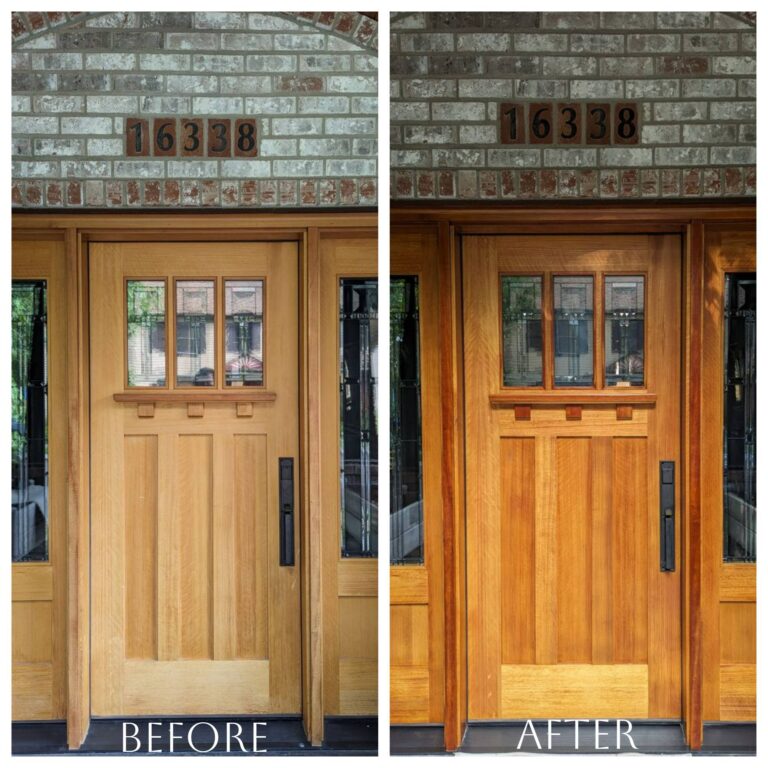
How Often Should You Maintain a Wooden Front Door?
There’s no single maintenance schedule that works for every door. The amount of protection your entryway receives from the weather makes a significant difference.
At Pearl Painters, we recommend the following general guidelines:
- Fully exposed doors: If your door receives direct sunlight and rain, inspect it at the end of every season. As a general rule, don’t let more than two years pass without checking its condition carefully. Many fully exposed doors benefit from a fresh maintenance coat every two to three years.
- Doors beneath covered porches or overhangs: A generous overhang can significantly extend the life of a clear finish by reducing direct exposure to rain and sunlight. These doors may go longer between maintenance coats, but annual inspections are still important.
- Doors with visible wear: If the finish starts looking dull, cloudy, or uneven, or if you notice areas where it appears to be lifting, have it assessed rather than waiting for your next scheduled maintenance.
These are guidelines, not guarantees. The finish itself, the door’s orientation, the amount of direct sunlight it receives, and the surrounding conditions all affect how quickly it deteriorates.
The important thing is to inspect your door regularly and address early signs of wear while a simple maintenance coat is still an option.
How to Inspect Your Door: The Fingernail Tap Test
You don’t have to be a painting professional to spot potential problems. A visual inspection is a good starting point, but at Pearl Painters, we also pay attention to areas where the clear finish may have started separating from the wood beneath it.
Here’s what to look for.
Start with horizontal edges. Moisture tends to collect along horizontal surfaces and flat edges, making the bottom rail and lower door profiles particularly important places to inspect. Check trim moldings and other areas where water or debris can accumulate, too.
Look for cloudiness or dullness. A clear finish doesn’t have to be visibly peeling to be deteriorating. Subtle discoloration, clouding, or a loss of sheen can be early signs that the protective coating is breaking down.
Check for cracking, peeling, and dark patches. These may indicate that the finish has failed and moisture has started reaching the wood or the stain beneath it. Once water discoloration develops, restoring the original appearance becomes much more difficult.
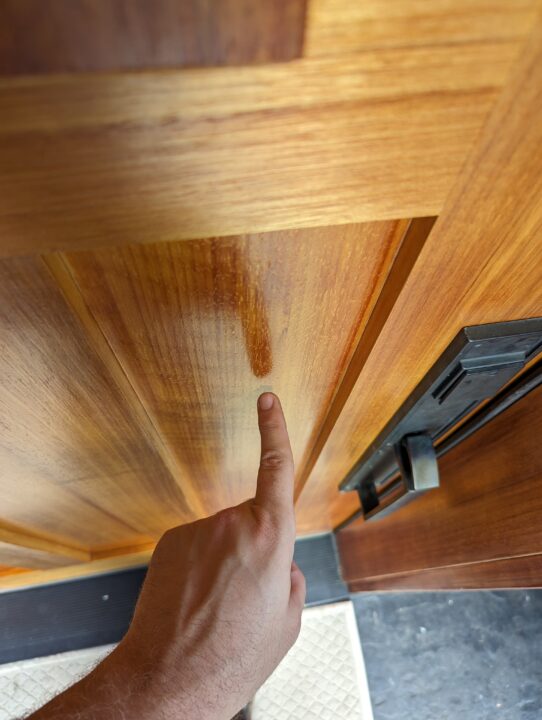
Try the fingernail tap test. Lightly tap your fingernail against different areas of the door, checking both vertical and horizontal surfaces. A sound, well-adhered finish generally feels firm and produces a solid response. If the coating has separated from the wood, it may sound or feel loose, papery, or hollow, even when the surface still looks relatively intact.
This test isn’t a definitive diagnosis, but it can help identify areas that deserve closer attention. If you find a spot where the finish seems to have lifted, it’s worth having it addressed before moisture gets underneath and stains the wood.
A Maintenance Coat Can Save You Thousands
When the existing clear finish is still largely intact, maintaining it is relatively straightforward. The goal is to refresh the protective coating before it deteriorates to the point where the door needs to be stripped and refinished completely.
At Pearl Painters, a typical maintenance coat involves lightly scuff-sanding the existing finish, cleaning away the sanding residue, and applying one fresh coat of a suitable exterior clear finish.
For this work, we recommend ProLuxe Window and Door, formerly known as Sikkens ProLuxe Window Finish. It’s a specialized clear finish that we rely on for its durability in Pacific Northwest conditions.
The distinction between maintenance and restoration is important. With a maintenance coat, we’re not trying to remove the original stain or take the door back to bare wood. We’re preserving the existing finish and adding another protective layer while the underlying wood and stain are still in good condition.
For a straightforward project, the work typically takes around four to six hours, including setup, sanding, cleaning, coating, and cleanup. That makes it a job we can generally complete in a single day.
What Does Wooden Door Varnish Maintenance Cost?
At Pearl Painters, a routine maintenance coat typically costs around $700 to $900 for a single door. By comparison, a full strip-and-refinish project generally ranges from $2,500 to $4,500 for a single door, with sidelights and surrounding trim costing extra.
The actual price depends on the door’s condition, the amount of preparation required, and the working conditions. Doors with significant finish failure or water staining may need considerably more work than a door that has been maintained regularly.
The difference in cost can be substantial:
Maintenance coat: Approximately $700–$900 and four to six hours of work.
Full strip and refinish: Approximately $2,500–$4,500 and a multiday restoration process.
These are Pearl Painters’ typical price ranges, not universal industry prices. We provide a firm bid upfront after assessing the work involved, so you know what to expect before the project begins.
The takeaway is simple: keeping the protective finish in good condition is usually much less expensive than restoring a door after the finish has failed.
What Happens When You Wait Too Long?
Once a clear finish has broken down extensively, adding another coat usually isn’t enough. The failed coating may need to be removed, the surface carefully sanded, the stain restored where possible, and multiple new coats applied.
Unfortunately, this process has its limits.
Water stains may not disappear with sanding alone. When moisture penetrates the finish and discolors the wood or stain underneath, sanding may not remove the discoloration completely. More extensive restoration may be necessary, and some stains simply cannot be eliminated without removing too much material.
Many wooden doors have a thin veneer rather than solid wood throughout. A door can have a genuine wood surface while containing a core made from another material or a different type of wood. That outer veneer is relatively thin, so there’s only so much sanding it can withstand.
If too much material is removed during restoration, the sanding can break through the veneer and expose the core beneath. Once that happens, recreating the original stained, clear-finished appearance may no longer be possible. The door might have to be primed and painted a solid color instead or replaced!
That’s a frustrating outcome when the original wood grain was part of what made the door special.
A full restoration can still be worthwhile, particularly if the door has distinctive details or sentimental value. But it requires more time, more labor, and a more involved process than routine maintenance. That’s why we encourage homeowners to address deterioration before the finish fails completely.
How Pearl Painters Maintains a Wooden Door
Our approach is built around preparation, choosing the right materials, and protecting the existing finish wherever possible. Here’s what a typical maintenance project looks like.
1. We Assess the Existing Finish
Before starting, we look at the overall condition of the coating, paying particular attention to horizontal edges, lower profiles, moldings, and areas where the finish may have lifted. We also consider how much sun and rain the door receives.
This assessment helps us determine whether a maintenance coat is appropriate or whether localized repairs or a more extensive restoration are needed.
2. We Lightly Scuff-Sand the Surface
For a routine maintenance coat, we lightly scuff-sand the existing finish with 220-grit sandpaper. This prepares the surface for the new coating without unnecessarily removing the original finish.
If the inspection reveals localized areas where the clear coating has separated from the wood, we carefully sand those spots back to sound, well-adhered material. Addressing these areas before water penetrates the wood helps reduce the risk of dark staining and more extensive repairs.
3. We Clean Away Dust and Residue
After sanding, we wipe down the entire surface with a microfiber towel dampened with water. This removes fine sanding dust and other residue that could interfere with the new finish.
It’s a straightforward step, but proper surface preparation makes a difference to the final result.
4. We Work Around Hardware and Weather Stripping
Not every part of the door needs to be removed for a routine maintenance coat.
In many cases, handles and locks can remain in place, which saves time without compromising the work. We pay particular attention to the areas immediately beneath hardware escutcheon plates, however, because a failed finish in those locations may require additional preparation.
Weather stripping is a different matter. We remove the rubber weather stripping before applying the clear finish. If the door closes against fresh coating, it can damage both the new finish and the rubber seals.
We reinstall the weather stripping after allowing the coating to cure, generally 24 to 48 hours later, depending on the product and conditions.
5. We Apply a Fresh Coat of Clear Finish
Once the surface is prepared and clean, we apply one / two coats of ProLuxe Window and Door clear finish.
Our objective is to restore the protective layer while preserving the original stain and natural wood appearance. We want the door to retain the character that made it attractive in the first place, while giving it better protection against the elements.
6. We Plan for Proper Drying and Curing
A typical maintenance coat takes four to six hours of working time, making it a single-day project in suitable conditions. That doesn’t necessarily mean every part of the job is ready for immediate use, though. The coating needs time to cure before weather stripping is reinstalled or the door is subjected to normal contact.
We factor those requirements into the work so the fresh finish has the best opportunity to perform as intended.
Don't Forget to Clean Your Door Between Maintenance Coats
A maintenance coat isn’t the only way to extend the life of a clear wood finish. Simple, periodic cleaning can also help.
Pollen, dust, dirt, and other contaminants tend to collect around door moldings, corners, and decorative details. When they remain on the surface, they can trap moisture and gradually contribute to finish deterioration. Hand oils and pet slobber can create similar problems in frequently touched areas.
Wiping the door periodically with a soft, damp cloth helps remove this buildup before it has time to cause damage. Pay particular attention to horizontal edges, lower profiles, and corners where debris tends to accumulate.
This won’t replace a maintenance coat, but it’s an easy way to care for your door between professional visits.
Can You Refinish a Wooden Door in Winter?
Yes. Although exterior painting and finishing work in the Pacific Northwest is often associated with the warmer, drier months, wooden doors can be maintained during winter, too. The key is creating suitable conditions for the work and allowing the finish to cure properly.
When conditions outside are too wet or cold, we can often remove the door and bring it into a garage or another suitable indoor workspace. There, we can lay it flat on sawhorses and work on the finish without exposing it to the elements.
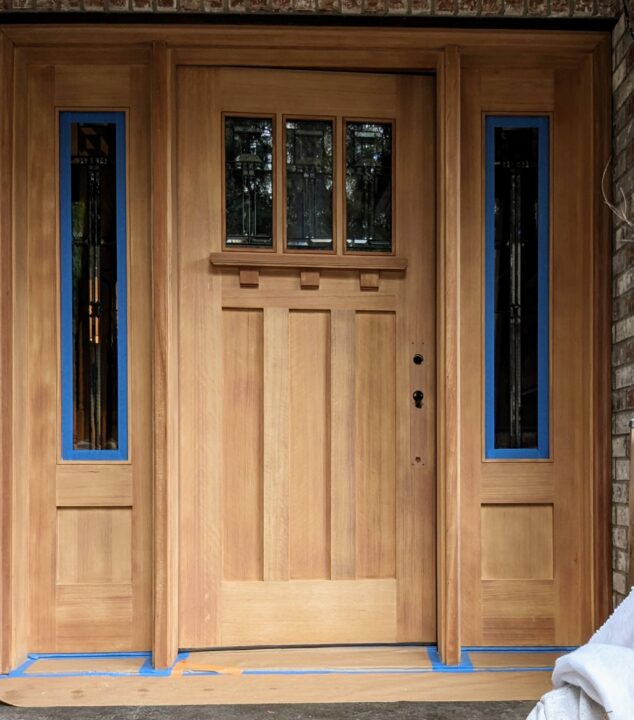
Sidelights and the surrounding door frame can present a different challenge because those components may not be removable. If they also need refinishing, we assess whether the work can be done in place.
Where there’s a suitable overhang, we may be able to create a temporary enclosed work area using plastic sheeting and zip poles. Depending on the conditions and the product requirements, we can also bring in heaters or fans to help establish a workable environment.
These measures make winter work possible in some situations, but they require additional setup and careful management. Wind, changing temperatures, and other difficult conditions can slow application and curing, extending the time needed to complete the project.
That extra work can affect the price, which is why we assess the circumstances and explain the costs upfront. At Pearl Painters, we provide a firm bid based on the specific work required rather than leaving homeowners to guess what the final bill might be.
If your door needs attention in winter, don’t automatically assume you’ll have to wait until spring. We’ll look at the door, the location, and the conditions to determine what’s practical.
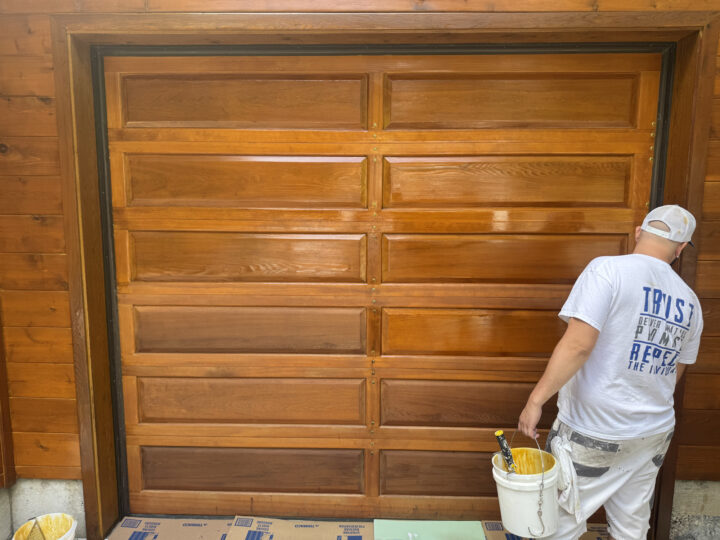
This Advice Applies to More Than Front Doors
Although wooden front doors are a common example, the same maintenance principles apply to other exterior wood surfaces with clear finishes.
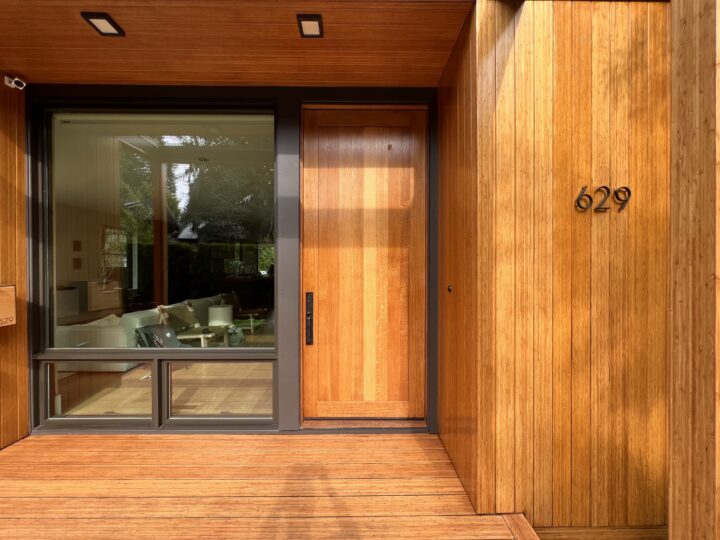
Wooden garage doors, sidelights, and other stained or clear-finished wood features can all benefit from regular inspection and timely maintenance coats. Like front doors, these surfaces are exposed to varying amounts of sunlight, moisture, and environmental buildup.
The specific maintenance requirements will depend on the material, existing finish, and exposure, but the principle remains the same: preserving a sound finish is generally easier and less expensive than restoring one that has failed.
Protect Your Wooden Front Door Before It's Too Late
A natural wood front door is an investment in your home’s appearance and character. Keeping its clear finish in good condition helps protect the wood, preserve the original stain, and avoid the expense and limitations of a complete restoration.
At Pearl Painters, our 25 years of experience in the Pacific Northwest have taught us the value of proper preparation, appropriate products, and good timing. We know that a door with a sound finish needs a different approach from one with extensive peeling or water damage, and we take the time to assess the condition before recommending the work.
Is your door looking dull?