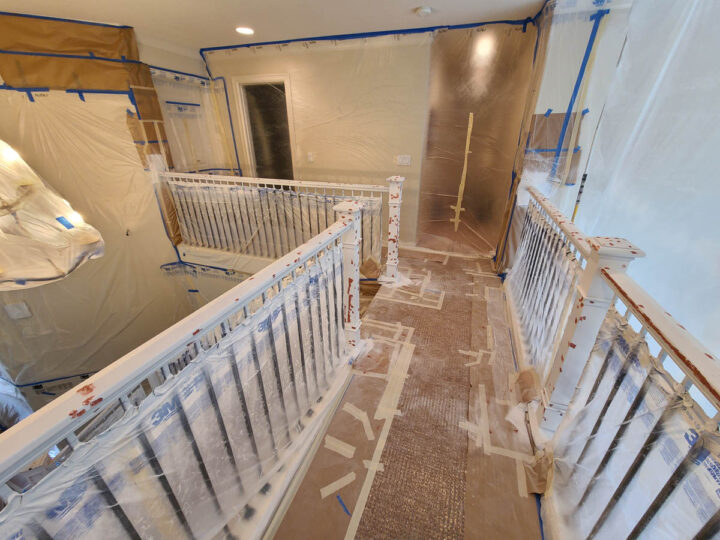
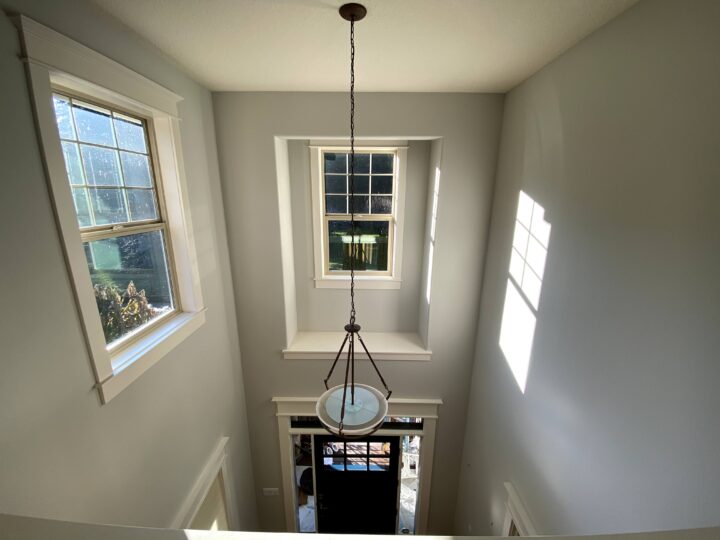
If you’ve ever wondered why professional painters follow a specific sequence when painting an interior, there’s a reason for everything we do. At Pearl Painters, we don’t just paint, we plan. The order we follow ensures a clean, efficient workflow and a beautiful finish that lasts.
If you’re wondering if ceilings, trim or walls get painted first, we do have a short answer for you: ceilings are first! But we are often asked why we paint ceilings first, followed by trim, doors, cabinets and finally walls. Here’s how (and why) it all happens in that order.
1. Ceilings Come First
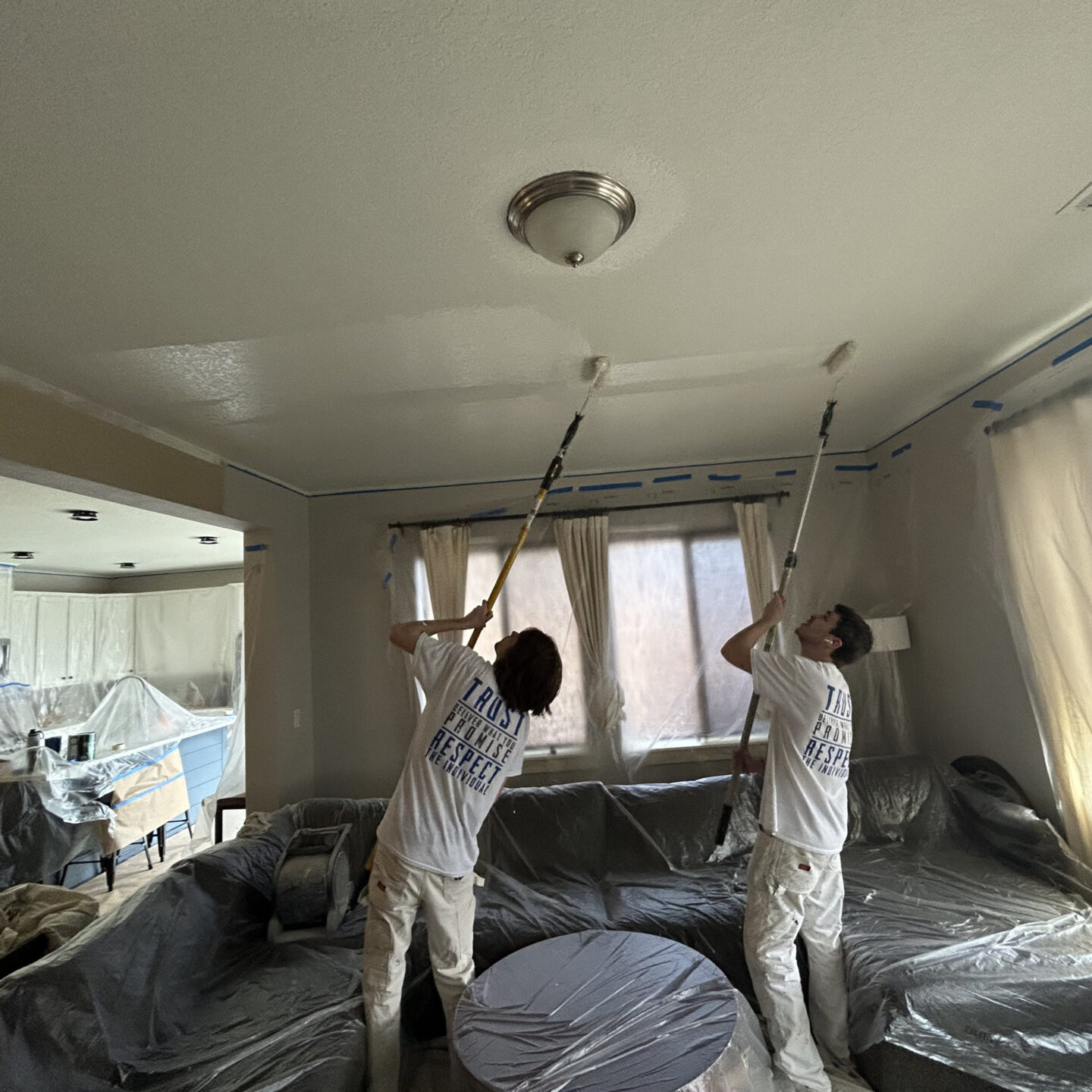
We always start from the top down. Painting ceilings first isn’t just about logic, it’s about physics. Gravity works against you when painting, so any tiny splatters or roller mist that land on the walls or trim won’t matter yet. We use special ceiling paints with flat finishes to minimize light reflection and hide imperfections. Once the ceiling is done, it sets the tone for everything else.
Painting the ceiling first also allows us to cut clean lines later when we move on to the walls. Trying to go back and do the ceiling after the walls are finished is a recipe for disaster. It’s messy, awkward, and almost guarantees touch-ups and a sloppy line transition.
2. Trim Is Next
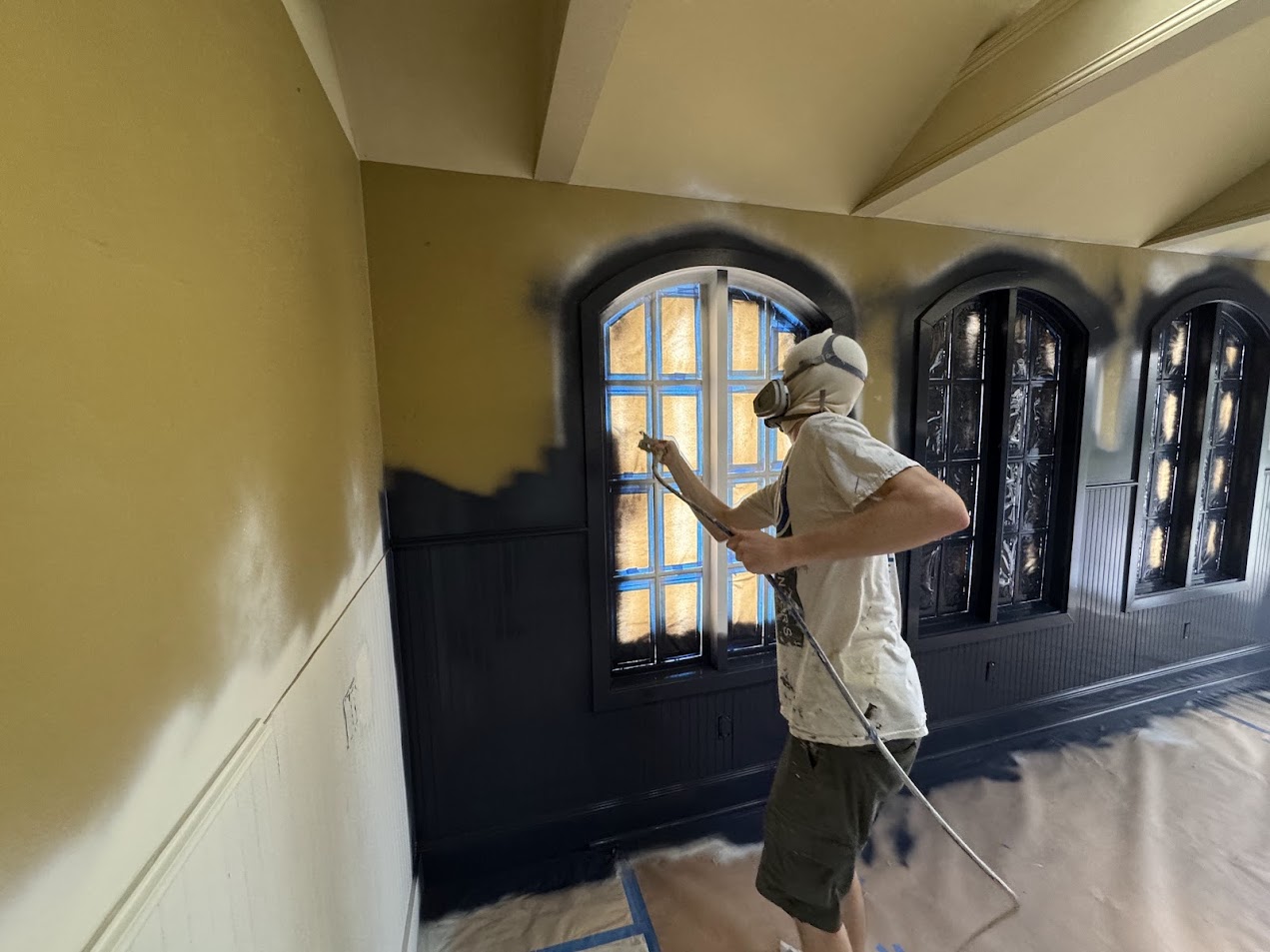
Trim—including baseboards, crown molding, wainscoting, window casings, and door frames—comes after ceilings for one key reason: precision.
There are three big reasons we finish trim before walls but after ceilings:
Overspray from ceilings: When we roll or spray ceilings, overspray and splatters naturally fall onto the trim. Painting trim after ceilings prevents damaging a freshly painted trim surface.
Efficiency when spraying trim: We’re often spraying trim, and by doing it before walls, we don’t need nearly as much masking to control overspray—because the walls will be painted last right over it.
Razor-straight lines with back sealing: This order allows us to use our back-sealing technique on the freshly painted trim to achieve razor-straight paint lines when it’s time to do the walls. With the trim paint still on hand, it’s the perfect time to lock in those transitions with zero bleed.
3. Cabinet Painting
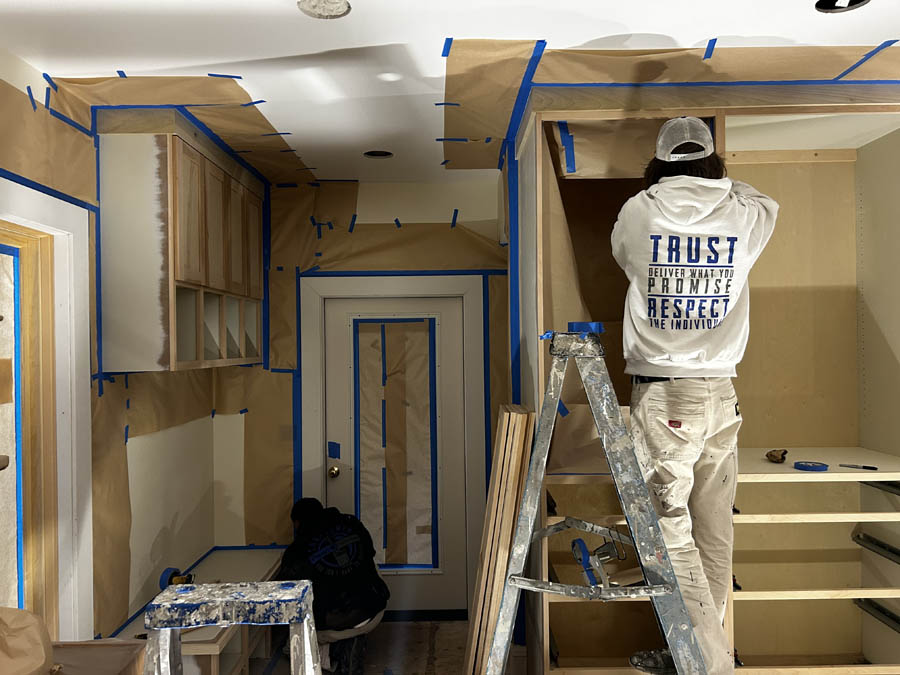
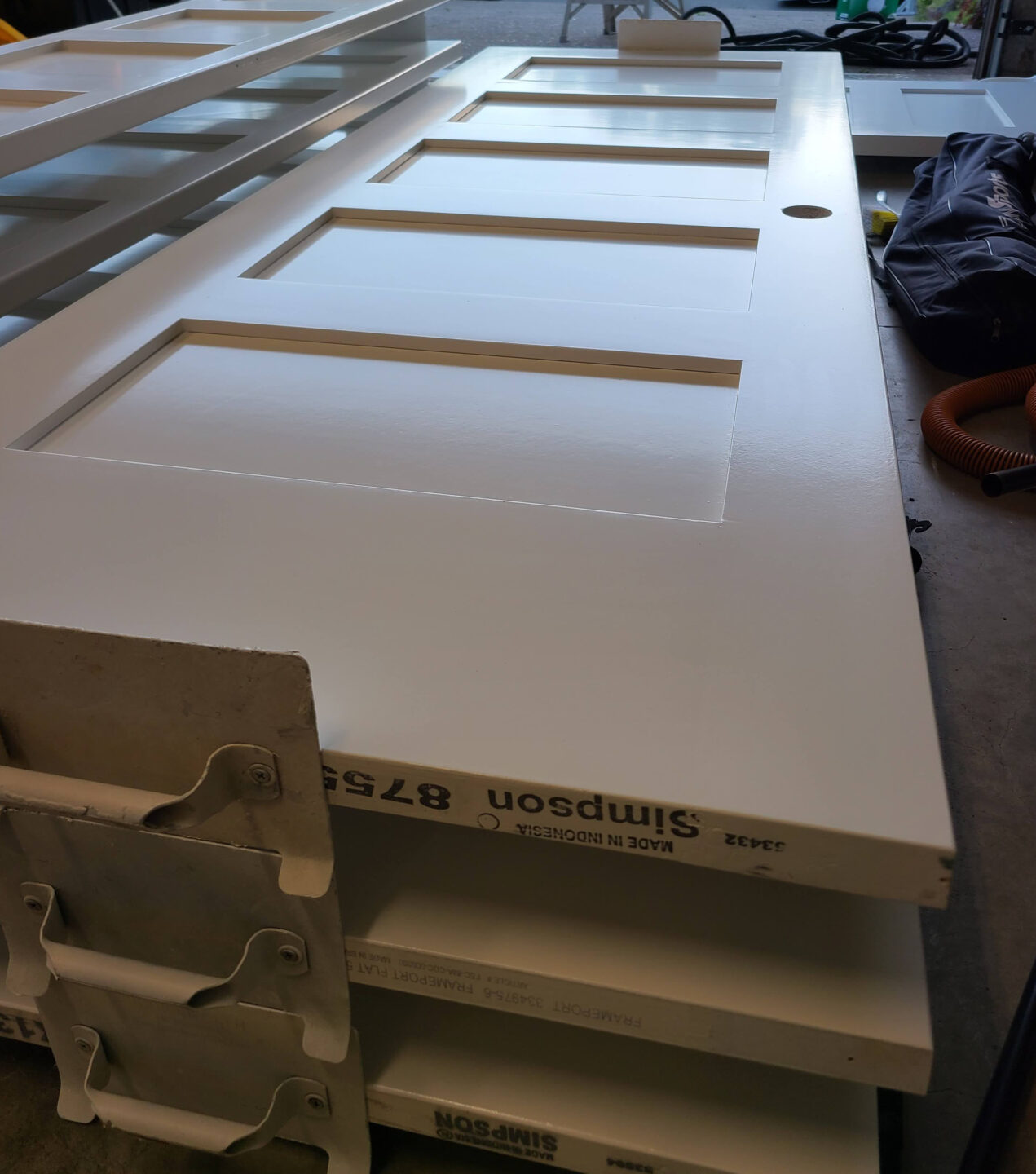
If cabinet painting is part of the project, we knock it all out after the ceilings and trim are complete. It’s all part of our perfected process. We remove doors and drawers to paint out of the environment (typically in a masked-off area in the garage), which gives the finished surface that beautiful finish that you want out of your cabinets.
If we’re painting parts of the cabinet boxes, we’ll handle it during this stage as well. Cabinet painting isn’t a single step process, so doing it after the trim and before the walls gives us the cleanest approach. Read more about how we prep before spraying your cabinets.
4. Doors
The order in which we paint doors depends on whether we are removing them or painting them in place.
If we’re removing them for spraying, we’ll paint them in a different area of the house—or in the garage—so we don’t disrupt work on other surfaces. They can be painted in any order, but they should be done early in the project because they need ample cure time before re-installing without damaging the fresh paint.
If we’re painting the doors in place, we paint them at the same time as the hand-painted trim—but always after the ceilings are finished.
5. Lastly, We Paint the Walls
Now that the ceiling, trim, doors, and cabinets are done, we paint the walls. It’s always the very last step (before cleanup and inspection, of course). This is typically where the color transformation really begins. Since the walls are the focal point of a room, or at least the element of a room that is most visible, it’s vital that they be as flawless and clean as possible.
We tape off the trim and use the back seal technique to get perfectly crisp lines at every edge. Even if the trim paint isn’t fully dry, we know exactly what tape to use to avoid damaging the fresh trim paint.
Painting might seem simple on the surface, but it’s the process that separates a DIY job from a professional one. By working from top to bottom, we keep things efficient, clean, and beautiful from start to finish.