“One-coat coverage” sounds great in theory and, in certain situations, it can work.
But in the professional painting industry, one-coat paints are not something we typically rely on. If a homeowner or property manager one-coats a wall and it’s mostly good, no issue. It’s very different when you are paying for a professional service. If the color or coverage isn’t 100% full, it doesn’t look or feel acceptable.
For that reason, we almost always apply at least two coats to any surface as a failsafe. It ensures uniform color, consistent sheen, and a finish that holds up to scrutiny in all lighting.
That being said, there are absolutely some tricks to utilize when using a one-coat paint to get the best possible result.
One-coat paint is usually best reserved for:
Same-color refreshes
Maintenance coats
Very minor color shifts
Any significant color change increases the likelihood that one coat just won’t quite do it, especially when going from dark to light. It’s much easier to cover a light color with a dark color than the opposite.
If you’re doing a bold transformation, plan on two coats. It’s simply more realistic.
Roller Choice
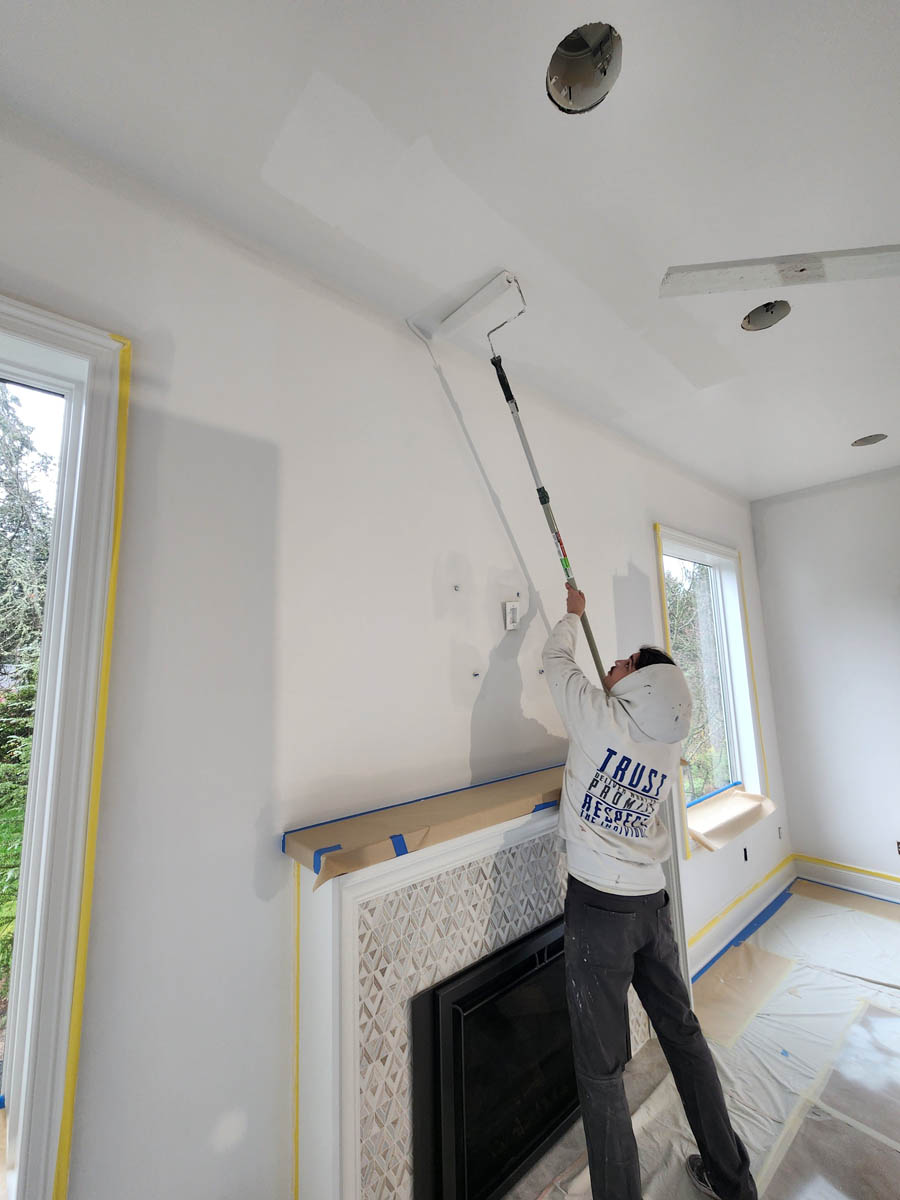
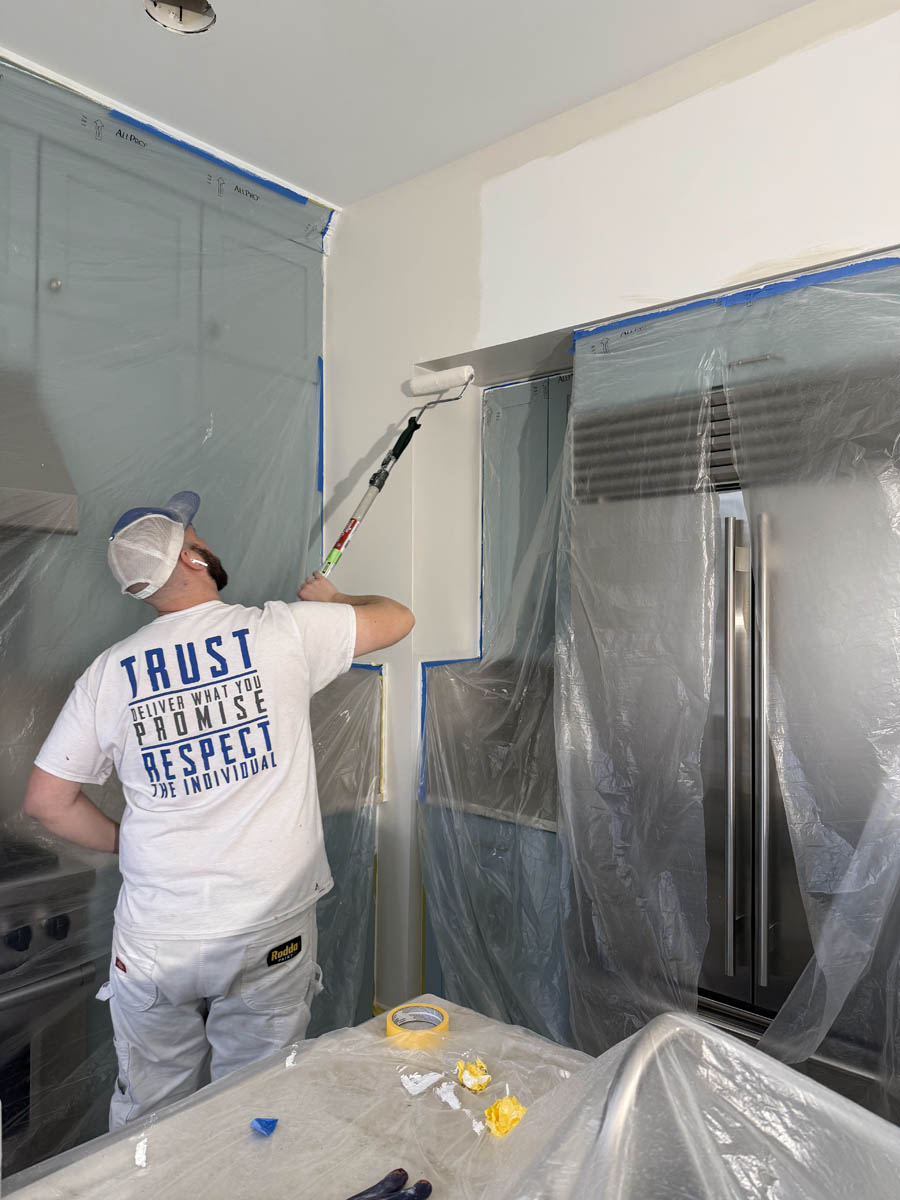
Unless you’re painting a very smooth wall, use at least a ¾-inch or 1-inch roller nap. We prefer a quality lambswool roller that holds a lot of paint and actually offloads it onto the wall.
A thin roller doesn’t carry enough product to properly fill texture. That’s how you end up with holidays (missed spots), especially on textured surfaces.
Texture hides flaws while the paint is wet. When it dries? Those tiny specks show up everywhere.
Dip Frequently and Keep It Loaded
Not reloading enough is one of the biggest mistakes we see in DIY painting.
Don’t try to roll every last ounce of paint out of the roller until it’s matted down and dry. That will quickly have a negative effect on coverage and consistency.
Keep the roller fluffy and loaded. Reload more often than you think you need to. Proper film thickness is critical when attempting true one-coat coverage.
The same rule applies to brushing. Don’t squish every drop out of the brush between uses, especially with higher-sheen paints.
Overlap Strategically
When rolling, aim for roughly a 60/40 or 70/30 overlap – about 40% overlap and 60% new coverage.
It’s incredibly easy to miss small pockets in textured walls when only doing one coat. While it may look fully covered initially, drying reveals subtle inconsistencies.
Methodical, systematic rolling reduces that risk significantly.