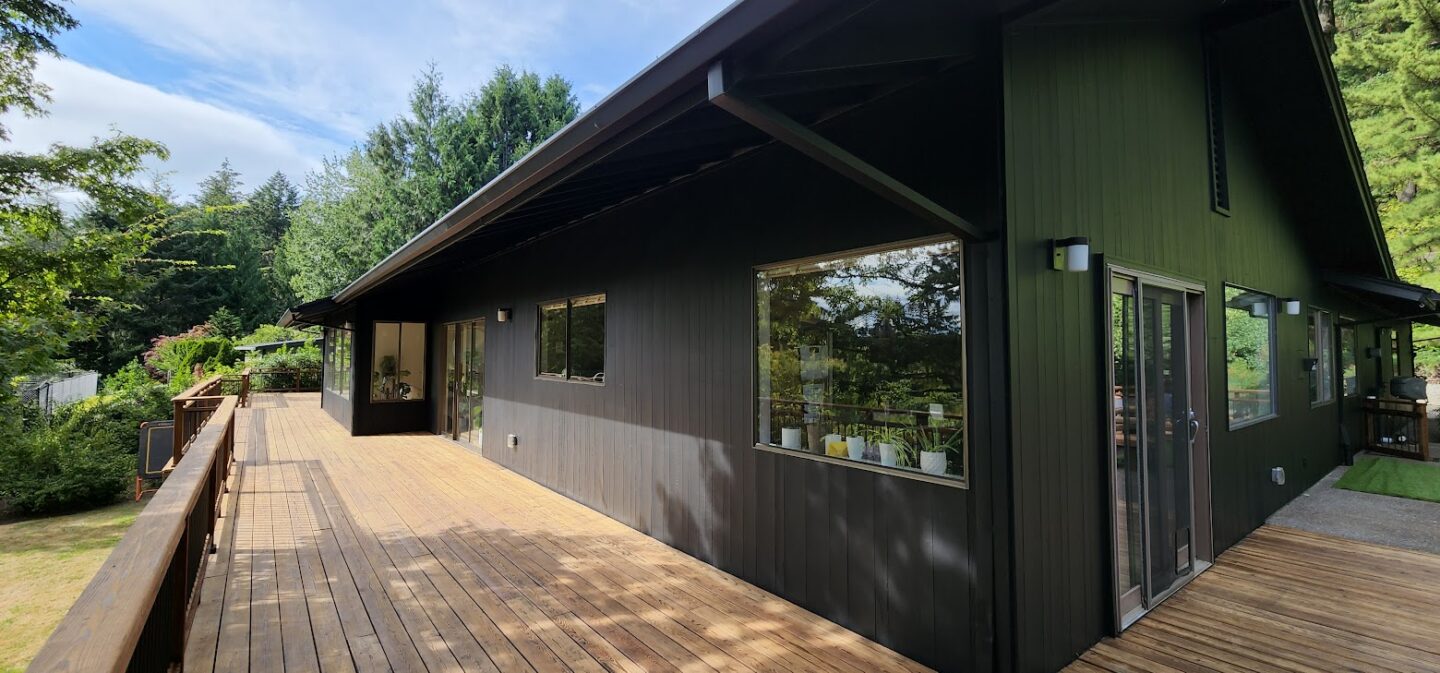
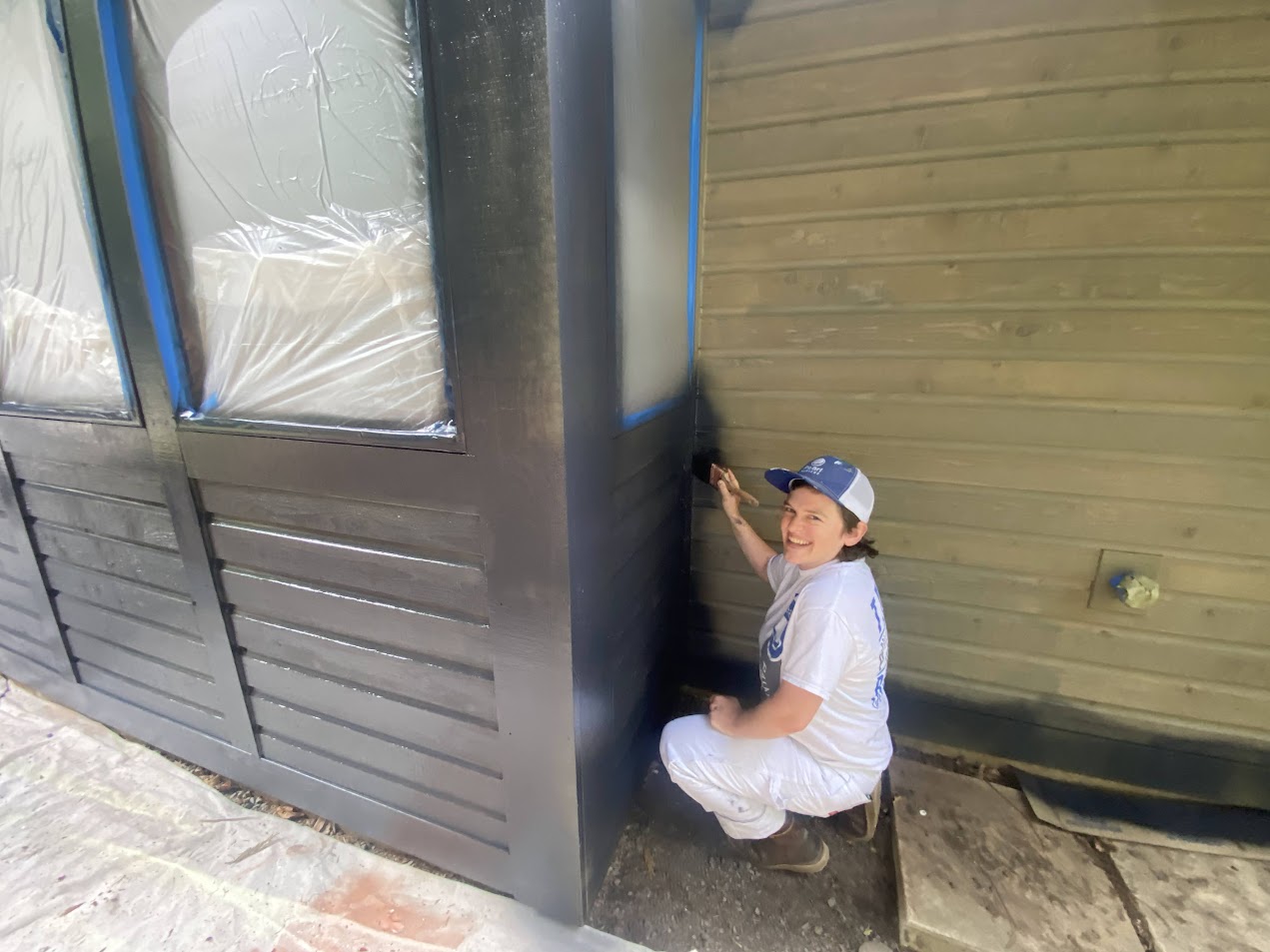
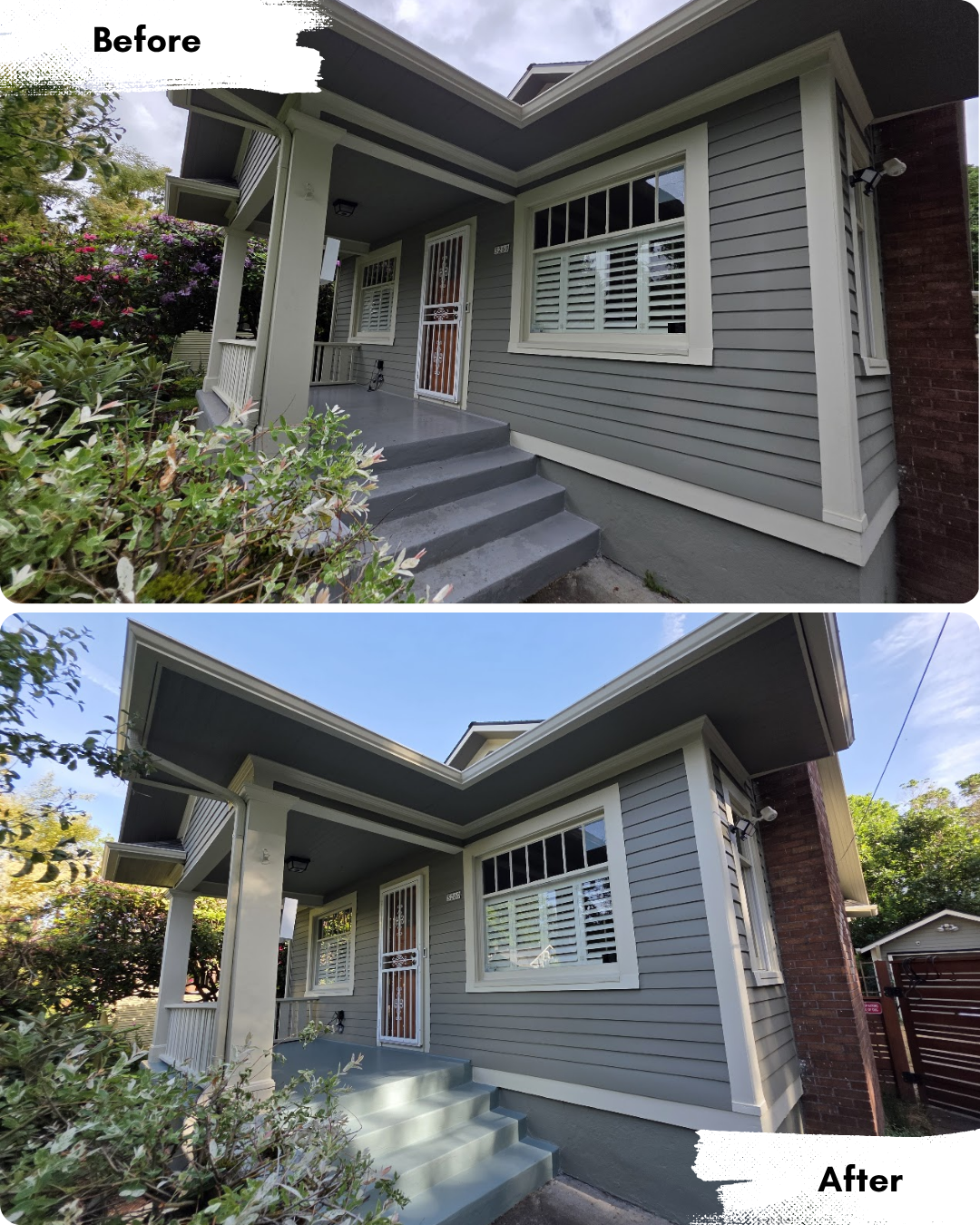
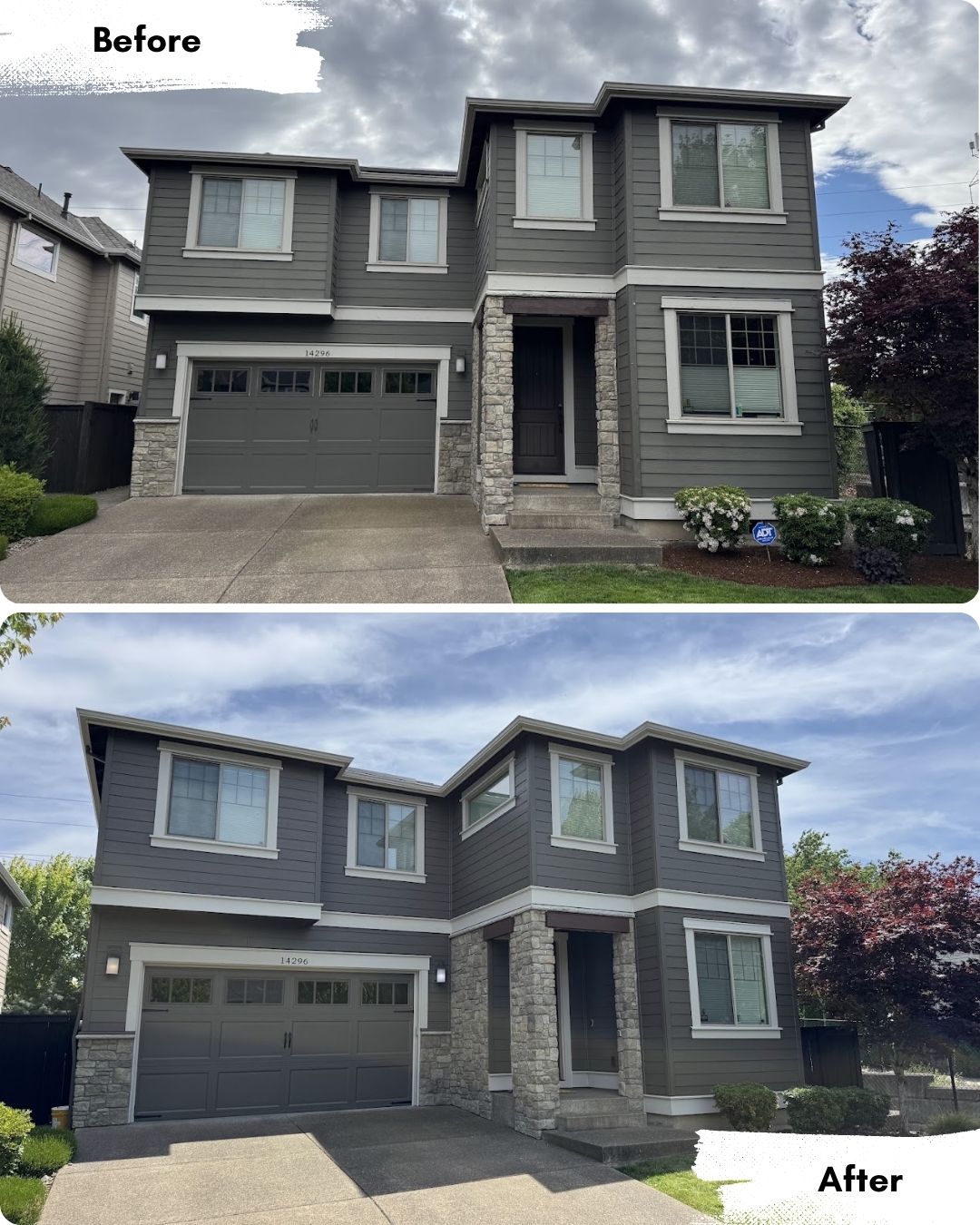
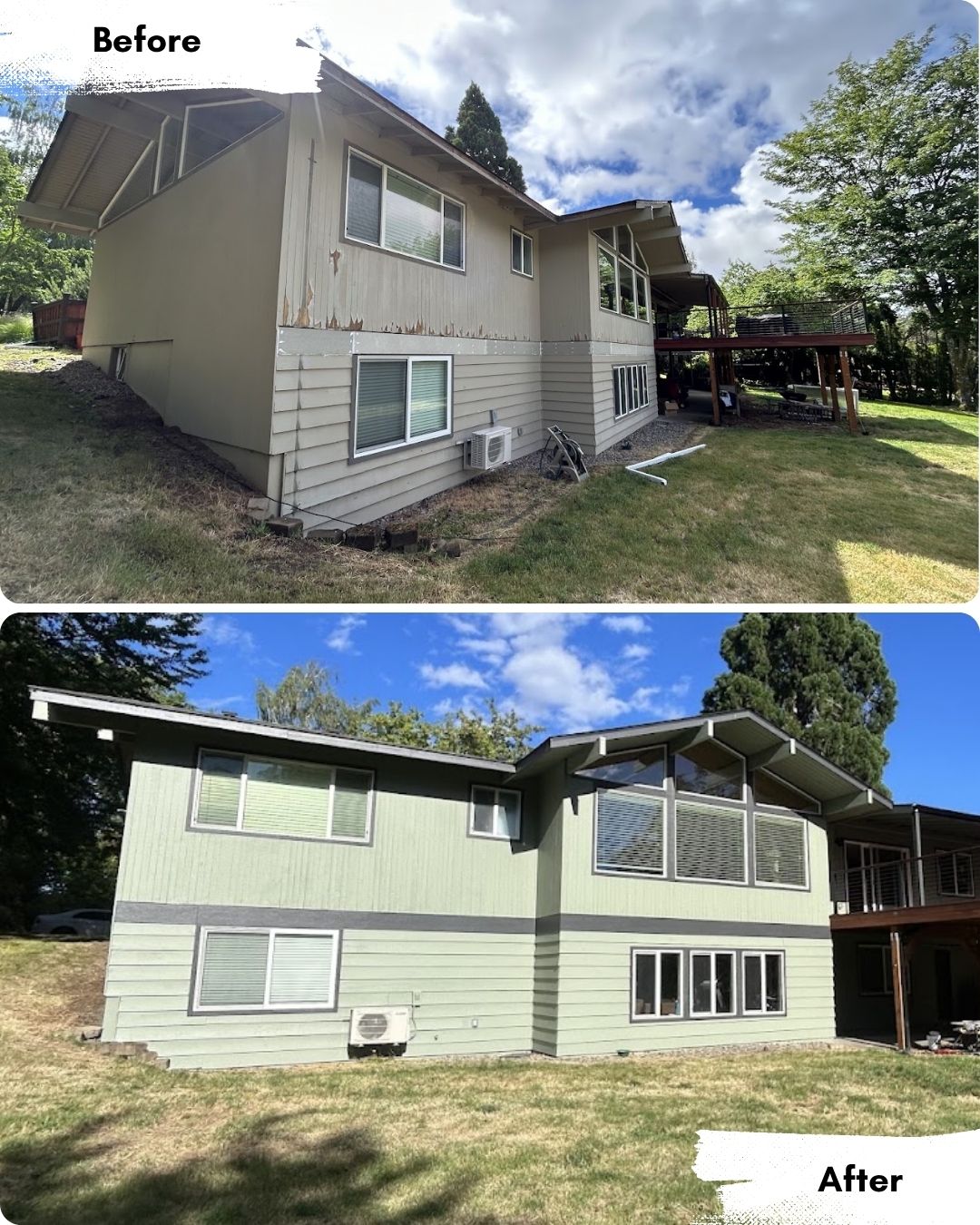
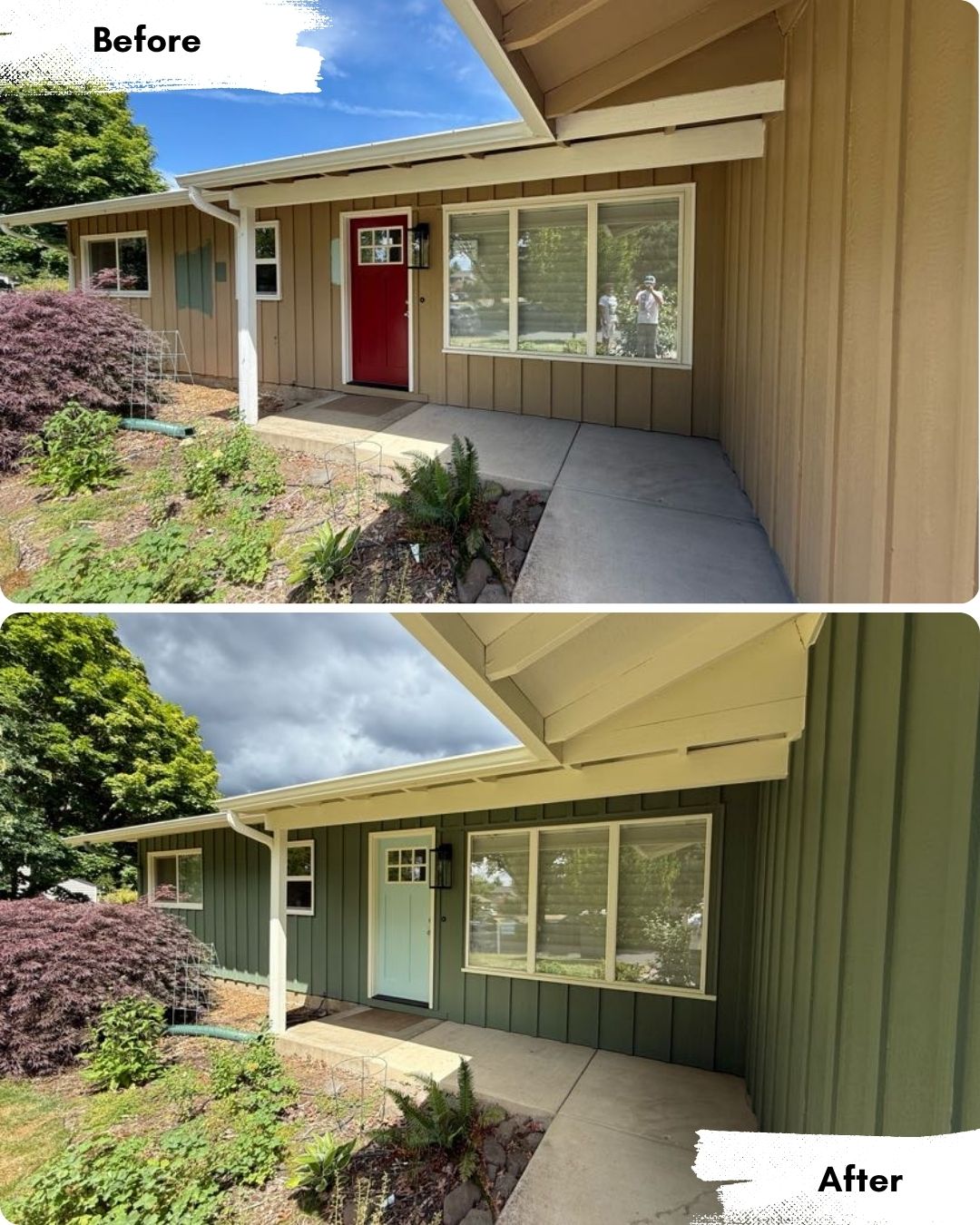
Dark exterior colors have become extremely popular in recent years. Deep charcoals, bold blues, and nearly black homes can look stunning in photos and on modern homes. We understand the appeal. Dark paint colors can feel dramatic, sophisticated, and contemporary.
However, what many homeowners don’t realize is that dark exterior paint colors can create real performance problems for a house over time. As professional painters, we always have this conversation with clients before they commit to a very dark color. Sometimes people think we’re exaggerating, but the science behind it is very real; the light reflectance value (LRV) is very real! Read more about LRV – click here to jump to the bottom of this post.
The science, LRV, and our experience have shown us the very real things that actually happen when you apply a very dark color to the outside of your home:
Issue 1: Dark Colors Absorb Much More Heat
The biggest issue with dark paint is heat absorption. Or, to put it into terms regarding LRV, dark paint reflects very little since it has a low LRV).
Lighter colors (with a high LRV) reflect sunlight, which helps keep surfaces cooler. Dark colors do the opposite. They absorb sunlight and convert it into heat. That means the surface temperature of your siding, trim, and caulking can rise dramatically compared to when the house was painted a lighter color.
We’ve seen exterior surfaces that were previously warm to the touch become almost too hot to touch after switching to a very dark color. That extra heat doesn’t just sit on the surface, it affects everything underneath it.
Issue 2: Paint Can Fail Much Faster
When exterior surfaces get extremely hot, the paint system is placed under much more stress.
Paint expands when heated and contracts when it cools. The hotter it gets, the more dramatic that movement becomes. Over time, this constant expansion and contraction can cause paint to lose adhesion.
That’s when you start seeing peeling paint, premature fading, and coatings pulling away from the surface.
In severe cases, the new paint can actually pull on the existing coatings underneath it, causing layers to fail much sooner than expected.
Issue 3: Caulking Breaks Down Faster
Exterior caulking is designed to flex with seasonal movement. But when temperatures get too extreme, that flexibility gets pushed beyond its limits.
With darker colors, we often see caulking lines dry out faster, shrink or crack, and pull away from joints.
Once caulking fails, water can begin to find its way into small gaps around windows, trim, and siding.
Issue 4: Nails Start to Move
Another issue that surprises homeowners is nail movement.
When siding heats up dramatically during the day and cools at night, the boards begin expanding and contracting more aggressively. Over time, that movement can cause nails to shift or slowly work their way out.
This can lead to nail heads becoming visible, small bumps in siding, and boards loosening over time.
Again, this isn’t because the installation was poor. It’s simply the result of extreme heat cycles.
Issue 5: Wood Boards Can Warp and Crack
Wood siding and trim are particularly sensitive to heat.
When boards repeatedly heat up and cool down at higher-than-normal temperatures, the stress can eventually lead to warping, splitting, and cracking along the grain
The darker the color, the more likely these issues become, especially on sides of the home that receive strong direct sunlight.
Why We Always Warn Clients
At Pearl Painters, we always bring all these issues up when homeowners choose very dark exterior colors. It’s not because we don’t like the look, in fact some of them are absolutely beautiful.
But part of our job is helping clients understand how their choices affect the long-term performance of the paint and the materials on their home.
We’ve had plenty of conversations where homeowners assume we’re just being overly cautious. Then a few years later, we start seeing the exact issues we warned about.
That doesn’t mean dark colors should never be used. It just means they come with trade-offs that homeowners should understand before making the decision.
If you love darker colors, there are ways to incorporate them more safely.
Many homeowners choose to use darker colors on accents, trim, doors, and smaller architectural sections.
This gives you the dramatic look without exposing the entire exterior surface to extreme heat buildup.
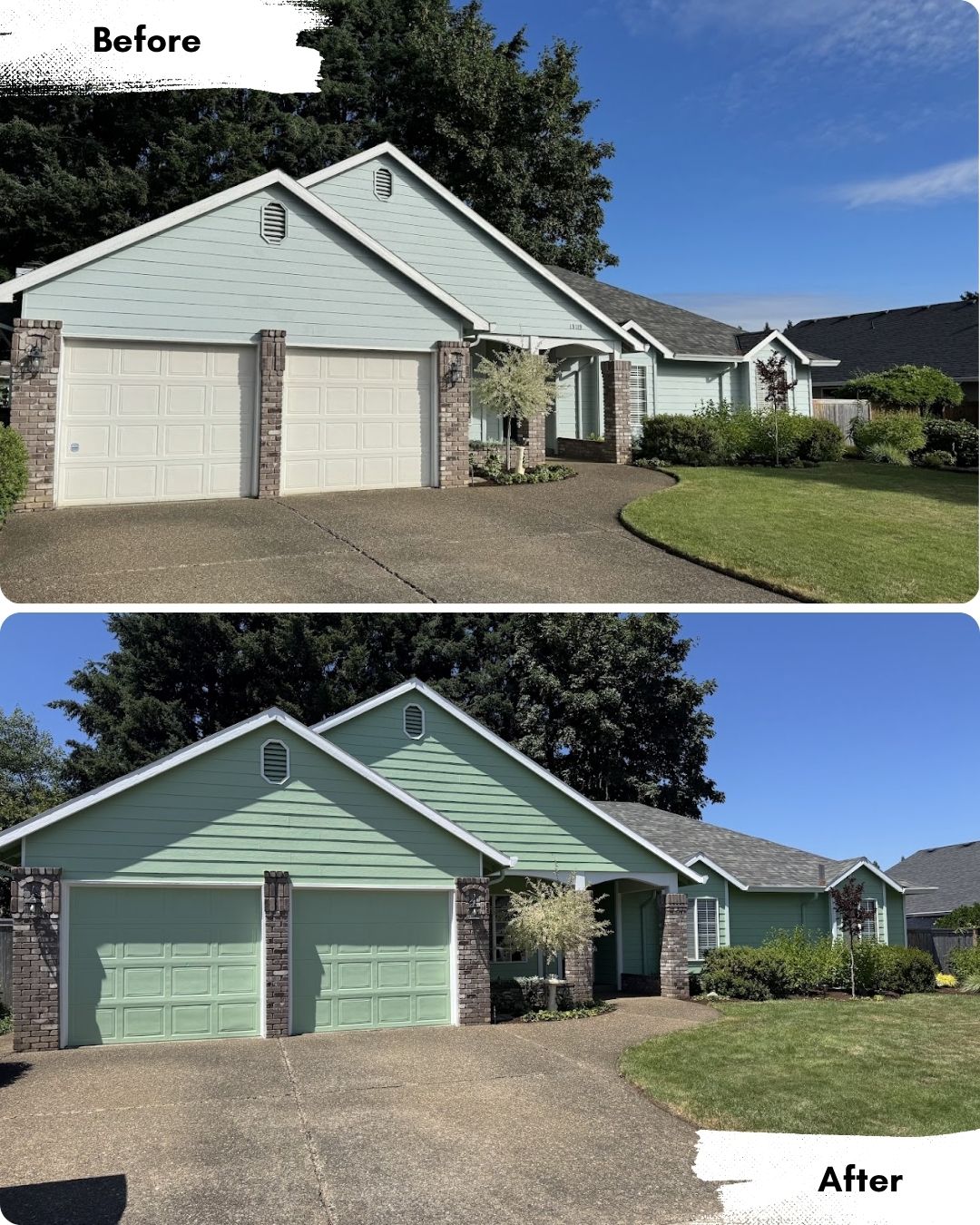
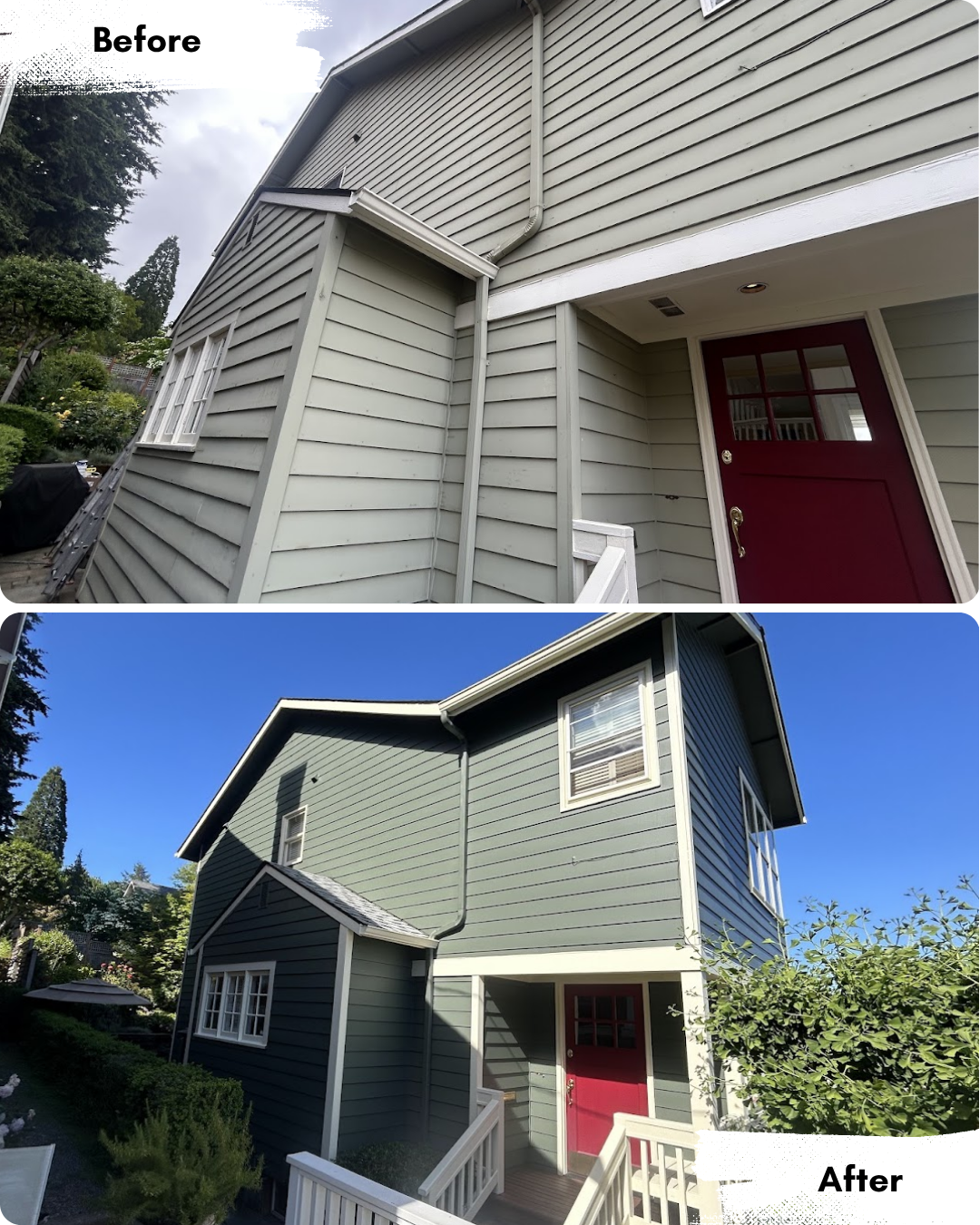
Another option is choosing slightly softened dark tones rather than the deepest possible color. Even a small shift toward a lighter shade can reduce surface temperatures significantly.
Light Reflectance Value (LRV)
There is a calculable way to approach dark colors on a home’s exterior — but it requires due diligence before a single drop of paint is applied. Every color has a Light Reflectance Value, or LRV — a scale from 0 (Absolute Black) to 100 (Pure White).
When sunlight hits a surface, the color determines how much energy bounces away versus gets trapped. A dark navy with an LRV of 10 is soaking up 90% of the light energy hitting it — all of which becomes heat radiating into and through the material beneath. High LRV colors (70+) reflect most light and stay cool to the touch. Low LRV colors (under 50) absorb light and convert it into heat — and that heat is what drives the thermal expansion, warping, and material stress we outlined above.
Materials like wood, vinyl, and fiberglass expand when they heat up and contract when they cool down. Do that repeatedly — every day, across seasons — and the cumulative stress causes warping, cracking, and seal failures. A lighter color with a higher LRV simply keeps the surface temperature lower, reducing that destructive cycle.
This is where homeowners must do their homework. Most manufacturers of doors, garage doors, windows, and siding specify a minimum LRV requirement for any paint applied to their products — often 55 or higher. Painting their product with a color that falls below that threshold can void your warranty entirely. If a dark-painted door warps or siding buckles, the manufacturer is under no obligation to cover the replacement.
The good news is that finding a color’s LRV is straightforward — every major paint manufacturer (Benjamin Moore, Sherwin-Williams, etc.) lists it on each color’s chip or product page, usually tucked into the color details. Before committing to a deep, dramatic exterior color, check the documentation for every product on your home’s exterior — your doors, your windows, your siding — and confirm the minimum LRV allowed. That number is non-negotiable. Your paint color must meet or exceed it.
At Pearl Painters, we’re happy to help you understand LRV and identify colors that work within those boundaries — but knowing your product specifications is a critical first step that only you, as the homeowner, can take.